



Born Ten Months Apart, FASTRACKs and HOT Lanes Went Different Directions.
With a major new rail line on the ballot, now is a good time to review the two most consequential transportation developments of the past 25 years: RTD’s FASTRACKS and CDOT’s HOT/Express lanes.
In August 2005, Congress authorized High Occupancy Toll Lanes—an idea first championed in Colorado by the Independence Institute—allowing congestion-priced tolls for single-occupant vehicles in order to use HOV lanes. Colorado’s Senator Ben Nighthorse Campbell and Congressman Bob Beauprez were credited for adding the provision to a landmark Federal Highway reauthorization bill. The first HOT lanes between Denver and Westminster opened one year later, in November 2006.
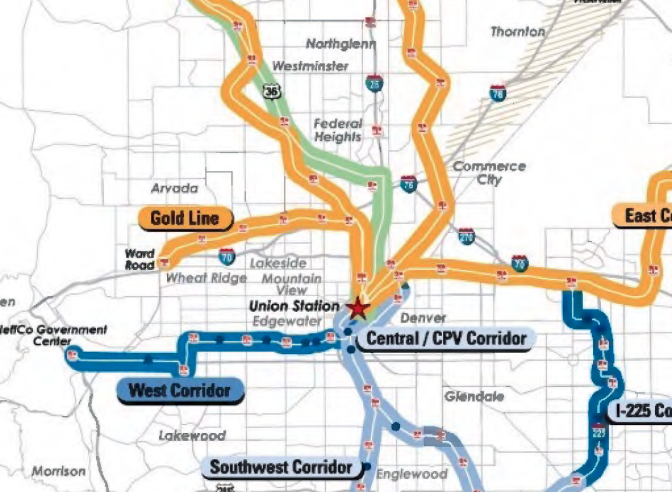
Just ten months before HOT Lanes passed into law, Metro Denver voters approved RTD’s $4.6 billion FASTRACKs rail plan. The first FASTRACKs-funded line, the W train to Golden, opened eight years later in 2013.
21 years later, the numbers are in and the differences could not be more striking.
FASTRACKs’ Dead End
FASTRACKs remains incomplete and overbudget with dwindling ridership numbers. Just as the Independence Institute predicted, today the program’s expensive trains, tracks and operating costs impose an unsustainable cost burden upon the entire RTD system.
Riders Disappearing: RTD’s overall ridership dropped 40% since 2019, and some FASTRACKS-funded lines show even worse performance. The Southeast Rail Line Extension has seen ridership drop by as much as 80%. (See: RTD’s FASTRACKS 2025 Report (page 11))
Diminishing Returns: Finishing FASTRACKs would possibly be the worst transportation investment in Colorado history. Set aside the “Northwest Rail Line” that is on the ballot as Issue 7A, the Colorado Connector,” and RTD forecasts that it would cost $1 billion to complete the remaining three extensions to existing lines, plus anthe “er $8.5 million in annual operating costs. RTD’s optimistic estimate for the year 2045 is that this billion-dollar investment would generate 1,500 additional daily boardings (i.e., one-way trips). Include their estimate for the $650 million COCO to Longmont, and they anticipate $1.6 billion will buy 3,600 additional daily one-way boardings. That’s nearly $900,000 per round-trip customer!
The HOT Lane Revolution
At first glance, an extra highway lane with a toll may seem more like a luxury than an improvement, with critics labeling such projects as “Lexus Lanes.” In reality, Coloradans should notice at least four distinct improvements: 1) increased capacity, 2) lowered times for ALL drivers, 3) Popular Bus Rapid Transit lines integrate with Express lanes, and 4) the road improvement money stretches further, thanks to added private financing for most Express lane projects.
Added capacity: In the 20 years since the initial 12-lane-mile “Central Valley I-25” HOT lane project opened in 2006 and exceeded expectations, CDOT has added more than 170 lane-miles of congestion-relieving Express lanes, with many more projects ready for a green light.
Lowered Times: Traffic engineers experiment with pricing strategies to maximize drive times for all lanes. Sometimes a lower price helps subtract volume from the free lanes, while at other times high prices send a market signal to commuters, who use the prices as a reference point to optimize their drive times. Most projects see at least a 15% improvement to all average drive times in the long run, but in some cases, such as I-70’s Mountain Express lanes on MLK weekend—drive time improvements reached 50% in the year after they opened. When Mountain Express lanes are open (which is only during peak traffic scenarios), traffic on I-70 stays above 45 mph about 89% of the time.
Transit Improvements: Ironically, the best transit lines in the Front Range can thank HOT lanes for their efficiency. CDOT’s Bustang Service to Fort Collins and RTD’s Bus Rapid Transit line to Boulder leverage HOT lanes to speed their roundtrips to Denver. Boulder’s BRT line has long been considered the most successful transit line in Colorado as measured by consistent ridership and farebox revenue.
Stretching Road Dollars further: While RTD wrestles with the financial money pit that is FASTRACKs’ maintenance and operating costs, CDOT’s “High Performance Toll Enterprise” division is constantly expanding highway capacity, thanks to healthy revenue from user fees that pay off public and private sector debt financing. Construction loans help to avoid inflation in road materials, which typically rise by 9% annually. Financing levels vary by project, but as an example, roughly 1/3 of the Eastbound I-70’s Mountain Express project came from private lenders. Roughly 70% of the C-470 Express Lanes were bond-financed. Financial analysts rate most Colorado Express lane project bonds “BBB”, or healthy enough to keep the money flowing for well-planned projects.
HOT lanes are not the solution for all of Colorado’s transportation needs… but at least they’ve proven their versatility and value. After reviewing FASTRACKs’ performance, not only is it impossible to justify further buildout— it’s hard to imagine how the existing lines can stay open.