

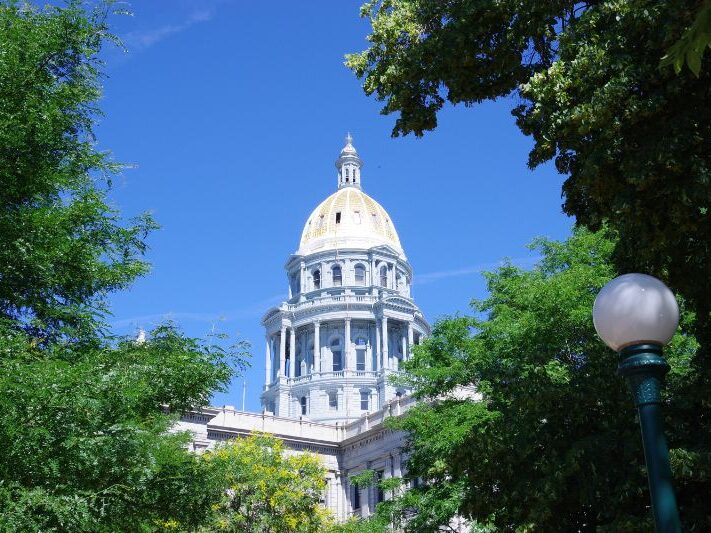


The Colorado legislature officially adjourned May 13, after weighing more than 600 bills over the course of 120 days.
Lawmakers entered the 2026 legislative session facing a set of familiar problems: another billion-dollar budget deficit, rising voter frustration over affordability, and growing concerns about Colorado’s economic competitiveness and business climate. Yet despite those warning signs, the Democrat-dominated legislature largely doubled down on the same governing philosophy that has increasingly defined the Capitol in recent years—more fees, more special interest tax benefits at the expense of other taxpayers, and more attempts to carve revenue streams out from under the Taxpayer’s Bill of Rights (TABOR).
To be sure, not every proposal succeeded. Several of the session’s most aggressive ideas died under time constraints, fiscal pressure, or gubernatorial resistance. And in a few policy areas, lawmakers even showed some signs of moderation, particularly on energy reliability and artificial intelligence regulation. But the broader tenor of the session remained unmistakable: an activist legislature searching aggressively for new revenue sources and new regulatory authority at a time when many Coloradans are already struggling with rising costs.
Here’s a (non-exhaustive) look at some of the notable bills Independence Institute followed closely this year and how they ultimately fared as the session wrapped up.
TABOR, taxes, and spending
Despite the above-mentioned billion-dollar deficit, lawmakers still managed to pass, and Governor Polis signed, a $46.8 billion balanced budget into law. For reference, that’s 62 percent larger than the state’s budget the year before Polis’ tenure in office began.
Rather than treat this latest deficit as a lesson about the perils of unsustainable spending growth and the legislature’s leading role in fueling it, many lawmakers instead treated it as justification for pursuing new ways to keep and redirect taxpayer money.
One of the most prominent examples of this was SB 26-135, the legislature’s latest attempt to permanently weaken TABOR. After clearing both legislative chambers, the bill refers a deceptively worded measure to the November ballot asking voters to forfeit their TABOR refunds for the foreseeable future by creating a new spending cap, allowing the state to keep and spend billions more in overcollected taxpayer revenue over time.
While supporters framed the proposal as an education funding measure, the bill’s long-term implications are far broader. After the first ten years, the revenue retained under the measure could be spent for virtually any purpose the legislature chooses. More importantly, the measure would directly undermine TABOR’s core purpose of restraining the growth incentives of government at a time when lawmakers are already trending toward profligacy. More detailed analysis of the bill can be found here.
Several additional bills targeted TABOR more indirectly.
HB26-1419 allows the state to claw back nearly $300 million in TABOR refunds in response to tax collection shortfalls associated with the federal One Big Beautiful Bill Act. Legislative staff, legal experts, and the state auditor repeatedly warned lawmakers about significant legal risks surrounding the measure. It passed anyway.
Meanwhile, HB26-1221, HB26-1222, HB26-1223, and HB26-1289 collectively reflected the legislature’s continued push to decouple Colorado tax policy from federal law while selectively tinkering with and expanding politically favored tax incentives, this time at the expense of the state’s business community. While HB-1221 and HB-1222 failed, HB-1223 and HB-1289 passed, continuing Colorado’s rapid shift toward a more complicated and less neutral tax code.
And perhaps no bill better captured the legislature’s instinct toward creative tax schemes disguised as “fees” than HB26-1418, which creates a new enterprise funded through a 5 percent fee on in-game and in-app purchases by social media and gaming companies. The proceeds will fund youth mental health programs. In a masterstroke of circumventing both TABOR and the voters of Colorado, the bill not only levies this new “fee” without the voter approval that should be required for a tax under TABOR, but it also authorizes a floating adjustment to the fee amount over time to ensure that revenue collections always stay just under the threshold that would trigger voter approval requirements under Proposition 117. Consider democracy defended.
At the same time, several particularly troubling proposals were successfully defeated.
HB26-1271 would have created three separate enterprises to collect new fees on alcohol manufacturers and distributors under the banner of mitigating “alcohol-related harms.” The structure appeared intentionally designed to avoid the same taxpayer-approved fee limits shirked by HB-1418 by splitting the program across multiple enterprises.
HB26-1012 proposed price controls for so-called “captive consumers” at places like stadiums and airports, ignoring the basic economic reality that restricting prices does not magically eliminate scarcity or operating costs.
And finally, HB26-1327 would have imposed new fees on large employers to offset Medicaid costs incurred by employees, to the tune of $2,300 per covered worker. If passed, it would have effectively penalized large businesses for employing lower-income workers in the first place, while also offloading some of the state’s fiscal responsibility for controlling the ballooning cost of Medicaid in the state budget. It was an idea so misguided that even national progressive media criticized it.
Energy
Energy policy remained one of the session’s central battlegrounds, with lawmakers continuing to struggle to reconcile aggressive decarbonization goals with mounting concerns about reliability and affordability.
One of the session’s more notable outcomes was SB26-182, a bipartisan piece of compromise legislation allowing Colorado Springs Utilities’ Ray Nixon coal plant to remain operational through 2032. The bill emerged after an earlier version, which would have provided even more flexibility for the state’s second-largest electric utility, encountered significant pushback from environmental groups. More detailed analysis of the bill can be found here.
Although the final version imposed considerably more conditions and restrictions than utilities initially sought, the legislation nonetheless represented an implicit acknowledgment that Colorado’s aggressive generation retirement schedule may be colliding with practical reliability and affordability concerns. Just a few years ago, extending the operational life of a coal plant would have been politically unthinkable in Colorado.
The legislature also saw competing visions emerge surrounding the future of large electricity users and data centers, though none ultimately prevailed.
HB26-1030 and SB26-102 represented more command-and-control approaches focused heavily on taxpayer handouts, onerous mandates, and centralized planning. Both petered out in the waning days of the session.
At the same time, HB26-1246 introduced a far more innovative, market-oriented framework for accommodating data centers and other large loads through consumer-regulated electricity arrangements. Although the bill did not pass, its introduction alone marked a meaningful shift in Colorado’s energy policy conversation by demonstrating at least some legislative openness to alternatives to ratepayer socialization and the traditional monopoly utility model. More detailed analysis of the bill can be found here.
Perhaps most importantly, lawmakers also passed HB26-1326, the Public Utilities Commission sunset reauthorization bill. While substantially improved from its initial version, the legislation still reflects ongoing tensions surrounding the lack of transparency and ideological balance at the PUC as it takes on an increasingly expansive role in directing utility planning and carrying out the state’s green energy mandates. Further analysis of the PUC Sunset bill can be found here.
Gun rights
Colorado lawmakers continued their multi-year push toward increasingly aggressive firearm regulation, though this year’s session featured fewer of the big-ticket gun ban bills that dominated previous sessions.
SB26-004 expanded the state’s already expansive “red flag law” to allow for “institutional petitioners” like schools and health care facilities to anonymously petition to have a person’s firearms confiscated if they’re found to be a threat to themselves or others. The measure was already signed into law by Governor Polis. Further analysis of the bill can be found here.
HB26-1144 expands the state’s already existing “ghost gun” ban by criminalizing the use of 3D printers to manufacture firearms, firearm components, and accessories. Earlier versions of the bill also would have criminalized the possession and distribution of digital files containing manufacturing instructions, a provision that raised enormous First Amendment concerns before ultimately being removed at Governor Polis’ request. Polis already signed the amended bill into law.
Fitting within the legislature’s preoccupation with self-manufactured firearms, SB26-043 would have required all firearm barrel sales in Colorado to occur in person through licensed firearm dealers after a background check. It would also have created new record-keeping requirements for dealers facilitating gun barrel transactions, effectively creating a dealer registration system for barrels themselves. The bill ultimately died following a veto threat from Polis.
Meanwhile, HB26-1126 passed and further expanded Colorado’s increasingly stringent state-level regulatory structure for federally licensed firearm dealers. The bill increases fines for dealers, imposes additional compliance obligations, mandates reporting of lost or stolen firearms, and lays the groundwork for future mandatory security requirements on gun stores through regulatory rulemaking.
Emerging technology
Artificial intelligence and digital regulation once again featured as a prominent source of legislative attention this year.
SB26-189 served as the long-awaited rewrite of the deeply flawed SB24-205 artificial intelligence law that previously made Colorado both a pioneer and a cautionary tale. The original legislation drew widespread criticism from both industry leaders and policy experts for imposing vague liability standards and burdensome compliance requirements, even as it paradoxically allowed certain discriminatory conduct intended to “redress historical discrimination.” It was also explicitly cited as a partial rationale for driving out the state’s largest company by market capitalization, which relocated to Florida.
The replacement measure, already signed by Governor Polis, still creates new compliance obligations and regulatory complexities, but it represents a substantial improvement over its predecessor. The bill requires disclosures when AI is used in decision-making related to housing, employment, lending, insurance, healthcare, and government services. More importantly, lawmakers appeared more willing this year to engage with technical realities and industry concerns rather than legislating from pure panic over emerging technology. More detailed analysis of the bill can be found here.
SB26-051, however, reflected the persistent temptation to pursue technologically simplistic solutions to complicated online safety concerns. The bill requires device-level age verification systems on phones and other platforms. While politically appealing, the proposal raises serious privacy, implementation, and effectiveness concerns—particularly given how easily technologically savvy minors can bypass many age-verification systems. Further analysis of the bill can be found here.
By contrast, HB26-1058 was one of the stronger technology bills of the session. The measure provides enhanced protections for minors featured in online content and requires platforms to remove material that minors no longer wish to remain online. Unlike many tech bills driven primarily by political messaging, HB26-1058 benefited from substantial industry engagement and targeted a more clearly identifiable harm.
Education
Education policy was once again dominated by battles over school choice, charter schools, and homeschooling. There were 68 education bills introduced this session alone.
One of the more encouraging developments came for charter schools, which collectively are expected to receive an additional $71 million in funding next year despite the state’s broader budget pressures.
At the same time, several lawmakers attempted to limit the practical viability of the state’s participation in a new federal school choice program.
HB26-1292 targeted participation in the new federal scholarship tax credit program created under the One Big Beautiful Bill. Governor Jared Polis previously made headlines for opting Colorado into the program, which allows up to a $1,700 federal tax credit for charitable contributions to K-12 scholarship-granting organizations that provide scholarships to private and public school children, becoming the first blue state to do so.
The legislation would have imposed sweeping anti-discrimination mandates on participating private schools covering religion, gender identity, and special education policies. For many religious schools, compliance would likely have been incompatible with their institutional missions, effectively excluding them from participation altogether. The bill ultimately died in committee, but the conversation about adding state-imposed “guardrails” around Colorado’s participation in the federal scholarship tax credit program is likely to continue.
Meanwhile, SB26-023—the School Finance Act—included amendments aimed at regulating homeschool enrichment programs operated through public schools. These programs have grown rapidly in recent years, offering homeschool families access to enrichment opportunities and educational resources. The legislature’s response appears poised to significantly constrain innovation in this area and reduce educational flexibility for homeschool families.
Transportation
Perhaps no other policy area saw more legislative brashness this year than transportation policy, where lawmakers pursued and adopted a series of explicitly anti-democratic measures aimed at centralizing their authority over regional transit governance in pursuit of long-term passenger rail expansion.
For instance, lawmakers passed SB26-150 to eliminate two-thirds of the elected seats on RTD’s governing board and replace them with future gubernatorial appointees. Never mind the fact that Colorado voters explicitly chose their preference for an elected board overseeing Colorado’s fourth-largest government.
Meanwhile, SB26-172 amended the Front Range Rail District to cut out Castle Rock, Lone Tree, Monument, Greeley, and most unincorporated areas—conveniently all of the most conservative regions of the district—ahead of a likely sales tax hike request that would appear on rail district ballots this November in order to help pay for Governor Polis’ Front Range Passenger Rail project. Further details on the bill can be found here.
Finally, lawmakers also rammed HB26-1430 through in the final days of the session as an attempt to neutralize Initiative 175, a citizens’ initiative that would require lawmakers to prioritize road funding. The bill marks a continuation of a growing pattern in which Colorado lawmakers attempt to preemptively blunt citizen-led ballot initiatives before voters can weigh in directly.
The bigger picture
Individual bills aside, the defining feature of the 2026 session may ultimately be the growing conflict between Colorado’s expansive progressive policy agenda and practical governing constraints.
For the past several years, Colorado lawmakers operated in an environment of consistent revenue growth buoyed by in-migration and economic dynamism. That allowed government expansion with relatively few immediate consequences. Now the environment has totally changed. Challenges like slower revenue growth, diminished in-migration, capital flight, rising electricity demand, worsening affordability pressures, infrastructure strain, and more are beginning to force harder choices.
This session revealed early signs of those tensions. It also marked the final session under Governor Polis’s leadership. Though his fingerprints are on many of the problematic bills identified in this article, he has also often been the most important handbrake against the legislature’s worst progressive excesses.
How Colorado lawmakers adapt to the state’s new reality—or continue to double down—may define Colorado politics over the next decade.