
A Preliminary Response to Prof. Ablavsky’s “Indian Commerce Clause” Attack
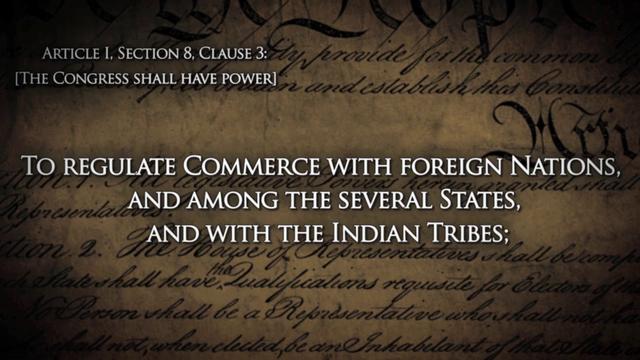
An advocate of vast congressional power takes quotes out of context, misrepresents what others say, and makes historical errors
Indian Child Welfare Act: Another case of Congress’s overreach goes to the Supreme Court

The Constitution does not give Congress authority to regulate the adoption of children.
Mr. President, Do the right thing: End the unconstitutional vaccination mandate

There is no Supreme Court authority higher than [Chief Justice] Marshall, and he himself told us that “health laws of every description” are matters for determination by the states.
Where were all the Constitution’s defenders when the feds raised the smoking age?
[S]etting minimum consumption ages is not a power the Constitution grants the federal government. The Constitution reserves it to the states.
New evidence on the “Power To . . . regulate . . . Commerce”

The three recently-issued Pennsylvania volumes . . . offer virtually no support to the commerce-is-everything school of thought. On the contrary, in the documents reproduced in this volumes “commerce” clearly refers to a concept separate from other economic and non-economic activities.
First decision of the Supreme Court Term: a unanimous liberal result
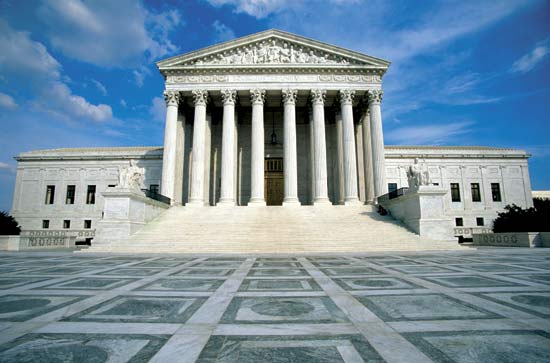
The statute is based on an overly-expansive definition of congressional power . . . But no member of the court wrote a concurring opinion to point that out . . .
New information on the Constitution’s ratification — Part III: Vermont
New Hampshire was, and is, quite a small state, but its ratification was particularly significant.
New information on the Constitution’s ratification — Part II: New Hampshire
New Hampshire was, and is, quite a small state, but its ratification was particularly significant.
Evidence on the Powers the Constitution Leaves Exclusively to the States
This column also appears at CNSNews. The Constitution enumerates the powers of the federal government. But has anyone listed the exclusive powers of states—the realm the federal government may not invade without violating the Constitution? When discussing state authority, the Founders usually pointed out only that the federal government’s powers were, as Madison said, “few […]
More Evidence From Last Term That It’s Not a “Conservative Supreme Court”
Note: This article was first published at cns news. There is a common media myth that the current U.S. Supreme Court, or at least a majority of the current justices, is “conservative.” But if a “conservative” justice is one who consistently interprets the Constitution in accordance with traditional methods of judging—as the Founders intended for […]
The Meaning of the Commerce Power and Congress’s and the Courts’ Use (And Abuse) Of It
Are you interested in the true meaning of, and limits on, the Constitution’s much-abused Commerce Power? In a speech at the University of Utah in Salt Lake City on November 19, 2013, I outlined the intended scope of the power, how I reached my conclusions, and how the Supreme Court has stretched the Commerce Power […]
How a Conspiracy Cracked a Monopoly
Anyone interested in the constitutional debate over the “Affordable Care Act” should pick up a copy of the new book, A Conspiracy Against Obamacare: The Volokh Conspiracy and the Health Care Case. This “conspiracy” was not a political plot or an illegal combination. Rather, it is one of the nation’s two top constitutional law websites—a […]