



Introduction
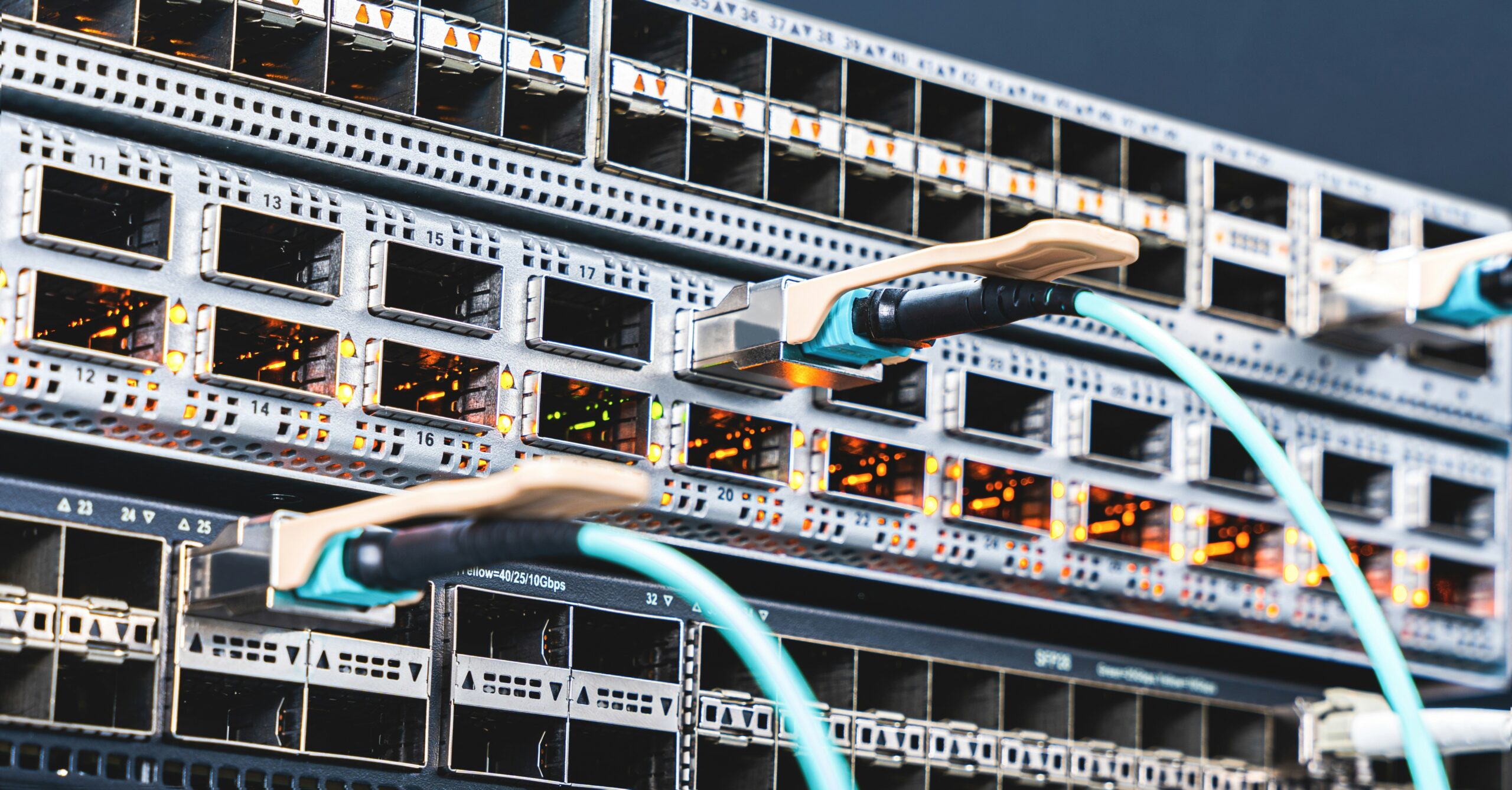
Data centers are the physical banks of computers that store, process, and deliver digital services. The computers within data centers, called servers, are distinguished from home personal computers by their function — they serve up answers to requests made by other computers.
Americans use data centers every day through search engines, streaming, email, cloud storage, and more. What’s new, and increasingly visible, is the growing market for artificial intelligence tools, which need more computing power and hyperscale data centers to develop AI models and answer requests. About 28 percent of data centers are enterprise-scale, drawing 1 to 10 MW of demand, and another 36 percent are colocation data centers, drawing between 5 to 50 MW of demand.[1] Only 37 percent of data centers are hyperscale data centers that train AI models.
How communities, businesses, and policymakers choose to address the anticipated wave of data center development will define each state’s economic trajectory. Axios reports that at least 11 states have proposed legislation to restrict or ban their development.[2] Maine became the first state to pass a moratorium on new data center construction, but the legislature failed to override Governor Janet Mills’ veto.[3] Even Sen. Bernie Sanders and Rep. Alexandria Ocasio-Cortez have introduced a federal moratorium bill.[4]
Colorado can protect its ratepayers and the environment while still enjoying the economic benefits of data centers — if only policymakers lead with facts, rather than fear.
Data centers in Colorado
There are currently 56 data centers in Colorado, 82 percent of which are in the Denver metropolitan area.[5] The state is not a major hyperscale market.[6] The QTS Denver-Aurora campus, at 177 megawatts, will be Xcel’s biggest industrial customer when complete, surpassing Evraz Rocky Mountain Steel in Pueblo.[7] CoreSite is building an 18 MW data center in Denver’s Elyria-Swansea neighborhood, meant to serve telecom, e-commerce, and other common applications, not primarily AI.[8]
Colorado is actively losing investment. The CEO of Flexential, a 900-person data center company headquartered in Denver, told Colorado Biz that his company had recently:
“walked away from a very large campus which would have brought a lot of benefits to a rural community because of the state-level policies that are in place around the need to have renewable offsets and just how difficult that is to get because of some of the permitting requirements that that exist at the state level to get the transmission lines put in.”[9]
The 2026 legislative session produced two competing bills, neither of which became law.[10] HB26-1030 offered a 100 percent sales tax exemption but would have required 100 percent clean energy by 2040, a 3-to-1 clean-to-thermal nameplate ratio before 2039 and a new 9-member bureaucracy.[11] SB26-102 requires 100 percent new renewable energy by 2031 and prohibits economic development rates for large data centers.[12]
Data centers can site anywhere in the country, and states are competing for investment. Utah allows off-grid private generation contracts,[13] and New Hampshire passed a one-page bill enabling off-grid electricity providers.[14] At least 38 other states offer sales tax incentives for data centers.[15]
The economic potential of data centers
Data centers generate tax revenue as well as employment opportunities. In 2021, data centers were estimated to support 45,460 jobs indirectly and $15.3 billion in economic output.[16] Loudoun County, a hotspot for data center development, has seen increased tax revenue of about $890 million.[17] For context, data centers could cover 94 percent of the county’s entire operating budget, of about $940 million. As a result, Loudoun County has lowered property tax rates every year since 2016.[18]
The U.S. Chamber of Commerce estimated in 2017 that the construction phase of a typical large data center creates 1,688 local jobs over 18-24 months, providing $77.7 million in wages.[19] After construction, data centers support another 157 local jobs, and these positions are highly trained IT, network engineering, facility management, and energy management professionals that earn high wages, 150 percent of private-sector wages.[20]
Eight data center developer headquarters are in Colorado, including STACK Infrastructure, Flexential, and CoreSite, yet none of these companies have built their largest facilities in-state.[21] Denver has grown slower than all but two other markets nationwide. Colorado risks losing $3 to $4 billion in potential data center investment over the next decade, according to a failed 2025 bill.[22]
Impacts on ratepayers
Data centers use energy, but that doesn’t necessarily mean that they’ll increase bills for residential ratepayers. Data centers can even be grid assets when deployed correctly.
A Lawrence Berkeley National Laboratory analysis from 2019-2025 found that the states with highest load growth tended to see retail prices decline in real terms, with the report citing North Dakota, New Mexico, and Nebraska as case studies.[23] That’s because electricity costs are dominated by fixed, capital expenses and adding large-load customers spreads fixed costs over more kilowatt-hours. Indeed, the report notes that “abundant, low-cost energy enabled load to be served at low incremental cost.”
In neighboring Wyoming, Black Hills Energy’s Large Power Contract Service tariff, developed with Microsoft around 2015, has insulated ratepayers from data center costs in the Cheyenne area, where seven data centers operate.[24] Montana-Dakota Utilities estimates that customers have saved around $70 in 2024 due to Applied Digital’s facilities near Ellendale, North Dakota, and may save up to $250 per year per customer when fully built.[25]
However, in places like the PJM Interconnection, data centers have put upward pressure on rates due to market design. PJM operates a competitive wholesale market as well as a capacity market, which is a forward auction in which generators are paid years in advance to guarantee that they will be available to meet projected demand. When forecasts spike, auction prices do too, even before any data centers have been built or draw energy.[26]
Which model applies best to Colorado? It doesn’t replicate PJM’s conditions. Instead, Colorado has vertically integrated, investor-owned utilities like Xcel Energy, whose rate increases are subject to approval of the Colorado Public Utilities Commission (PUC). It also doesn’t have a large concentration of data centers, as PJM has in its Virginia “data center alley.”
However, Colorado may see upward pressure on rates if it continues to encourage demand growth through electrification mandates, electric vehicle adoption targets, and oil and gas electrification. It could also stop strangling the supply-side of the equation: it doesn’t encourage the cheap, abundant dispatchable generation that its neighbors in Wyoming and North Dakota foster. Colorado is locked into emissions reduction mandates, including an 80 percent emissions reduction by 2030 for Xcel, which means the utility must retire dispatchable capacity on political timelines regardless of new demand growth.[27]
Water use
Water is a serious concern in the Colorado River Basin, and the water use of data centers is an emotionally charged issue. Fortunately, the alarm is disproportionate to the facts.
Take the claim that “data centers can consume up to 5 million gallons per day,” perpetuated by the Environmental and Energy Study Institute, a “top-rated climate nonprofit.”[28] The number conflates three distinct categories: direct cooling water consumed on-site, water used by power plants for electricity, and water consumed during semiconductor manufacturing. The water used for power plants is nonunique and applies to any facility that uses electricity, and the water used in semiconductor manufacturing is dispersed through the global supply chain.
The direct cooling water consumed by a data center is what matters most to communities worried about their local water supply. And luckily, that number is far smaller. CoreSite’s proposed 18 MW data center in north Denver is likely to use 230,000 gallons of water per day at peak capacity and will use less on average days.[29] At peak capacity, that is equivalent to the daily use of 4,600 residential customers of Denver Water.[30]
For context, agriculture accounts for 89 percent of Colorado’s water consumption, at 4.7 million acre-feet per year, or 1.53 trillion gallons.[31] For every gallon that CoreSite’s additional data center would use (if it runs at peak capacity 24/7/365), Colorado’s agricultural concerns use about 18,200 gallons. Colorado’s 236 golf courses used about 12.4 billion gallons of water in 2018, which is about 160 CoreSite additions at full tilt.[32]
In colder environments like Colorado, data centers rely on air cooling from the outside, without the costs and complexities of water cooling. For those data centers using water, modern cooling technology is reducing water use, and data center developers are pursuing these efforts voluntarily. Closed-loop systems, which use sealed, recirculating systems, cut consumption by 50 to 70 percent because they divert water initially, then keep it within the system.[33] Amazon Web Services (AWS) is expanding its water recycling from 20 data center sites to 120, estimating 530 million gallons of water saved per year.[34]
What matters more than the number of gallons a data center uses are how competing uses of water are resolved voluntarily, at mutually agreeable prices, so that water flows to its highest use. In water-scarce regions in the West, individuals who want to use water must file for an appropriative right, which will be approved only if there is water to allocate, meaning data centers cannot “steal” water.[35] Were policymakers to create a market for water rights, price signals could reflect the scarcity of water rather than just its delivery costs — not only to the benefit of data centers, but agriculture and industry too.
Policy solutions
Colorado does not need to choose between data center development and ratepayer protection. Six policies should guide the legislature to productive discussions around data centers.
- Developers as community partners: Data centers are capital-intensive, long-lived, and locally impactful projects. Data centers should consider building durable community support through local presence, hiring, and infrastructure investments in the form of a community fund and sustained sponsorship of local institutions. Developers should also consider offering voluntary, formula-based contractual payments directly from developer to households within a defined proximity to the facility, calibrated to compensate for measurable, constrained negative externalities like noise, viewshed, and traffic. The oil, gas, and mining industries learned the importance of gaining social license through decades of costly conflict. Data center developers have an opportunity to learn it earlier and at a lesser cost.
- Bring-Your-Own Power (BYOP): BYOP means a data center can build or contract for its own generation but remain interconnected to the grid for backup and within the existing regulatory framework. Under BYOP, data centers can add jobs and tax revenue without adding much appreciable demand to the grid that ratepayers must fund. Colorado should ensure that BYOP is legally and regulatorily straightforward.
- Consumer-regulated electricity: CRE allows private utilities to generate, transmit, and sell electricity directly to customers under voluntary contracts, entirely unconnected to the regulated grid. Ratepayers are fully insulated from data center infrastructure costs because the systems are physically islanded from the existing grid. HB26-1246 ultimately died in committee, but legislators should work to enable this additional pathway for data centers to site in Colorado.[36]
- Prevent retroactive local moratoriums: Retroactive zoning changes that restrict or prohibit data center construction undermine property rights and investment certainty. Legitimate concerns about noise, light, and air quality from diesel backup generators can be addressed through existing nuisance law, and failing that, can be addressed through narrowly tailored, local ordinances that address specific harms.
- Thoughtfully designed large load tariffs: Well-designed large-load tariffs keep data centers on the grid. Large load tariffs should reflect the actual costs of providing service without penalizing data centers, which are price-sensitive and will not choose to site where grid service is more expensive than in other states, or self-generation. BYOP and CRE pathways, as well as individualized tariffs like Black Hills Energy’s model with Microsoft, provide a competitive check on monopoly utility pricing.
- Oppose state-level generation mandates: Both proposals considered in Colorado’s 2026 legislative session would have forced data centers into specific generation portfolios. These provisions would have massively increased developer capital costs.[38] Data centers should be free to procure whatever energy mix they choose, dictated by the market, rather than the legislature. Further, lawmakers should consider amending or repealing Colorado’s statewide generation mandates that restrict utilities from adding affordable, reliable, and dispatchable sources of energy.
Sarah Montalbano is an energy policy analyst with the Independence Institute’s Energy and Environmental Policy Center and Always On Energy Research.
Footnotes
[1] Hoffman, Gabriella. “Policy Focus: Data Centers and the Environment.” Independent Women, April 1, 2026. https://www.independentwomen.com/2026/04/01/policy-focus-data-centers-and-the-environment/.
[2] Gold, Ashley, and Natalie Daher. “These States Don’t Want Data Centers in Their Backyards.” Axios, April 5, 2026. https://www.axios.com/2026/04/05/data-centers-midterms-state-bans-bills-ai.
[3] Mundry, Jackie. “Maine Legislature Does Not Override Gov. Mills’ Veto of Data Center Moratorium.” WMTW, April 29, 2026. https://www.wmtw.com/article/maine-data-center-moratorium-no-veto-override/71166098.
[4] Curi, Maria. “Sanders and AOC Unveil Data Center Moratorium Bill.” Axios, March 25, 2026. https://www.axios.com/2026/03/25/sanders-aoc-data-center-moratorium-bill.
[5] Data Center Map. “Data Centers in Colorado.” Accessed May 20, 2026. https://www.datacentermap.com/usa/colorado/.
[6] Colorado Legislative Council Staff. Memorandum on Data Center Impacts on the Environment, Public Health, and Energy Costs. Denver: Colorado General Assembly, March 5, 2026. https://content.leg.colorado.gov/sites/default/files/r26-49-data-center-impacts-on-economy-and-the-environment-accessible.pdf.
[7] Kramar, Andrea. “Competing Bills Could Determine Future of Data Centers in Colorado.” Rocky Mountain PBS, February 18, 2026. https://www.rmpbs.org/news/government/colorado-data-centers-competing-legislation.
[8] Oldham, Jennifer. “As States Spend Millions to Woo Data Centers, Colorado Is Having a Reckoning.” Capital & Main, April 7, 2026. https://capitalandmain.com/as-states-spend-millions-to-woo-data-centers-colorado-is-having-a-reckoning.
[9] Peterson, Eric. “State of the State: Colorado Weighs Future of Data Centers Amid AI-Driven Demand.” ColoradoBiz, December 10, 2025. https://coloradobiz.com/colorado-data-centers-future-ai-demand/.
[10] Brasch, Sam, and Taylor Dolven. “Effort to Attract Data Centers to Colorado with Tax Incentives Fails.” Colorado Public Radio, May 7, 2026. https://www.cpr.org/2026/05/07/data-center-incentives-colorado-die-in-legislature/.
[11] Colorado General Assembly. HB26-1030, Data Center and Utility Modernization. 2026 Regular Session. https://leg.colorado.gov/bills/HB26-1030.
[12] Colorado General Assembly. SB26-102, Regulation of Large Data Center Operators. 2026 Regular Session. https://leg.colorado.gov/bills/SB26-102.
[13] Utah State Legislature. S.B. 132, Large-Scale Economic Development Amendments. 2025 General Session. https://le.utah.gov/~2025/bills/static/SB0132.html.
[14] Fisher, Travis, and Glen Lyons. “New Hampshire Sparks a Revolution in Electricity Supply.” Cato Institute, September 26, 2025. https://www.cato.org/commentary/new-hampshire-sparks-revolution-electricity-supply.
[15] National Conference of State Legislatures. Subsidizing Servers: How States Are Competing to Attract Data Centers. Denver: NCSL, April 2026. https://www.ncsl.org/fiscal/subsidizing-servers-how-states-are-competing-to-attract-data-centers.
[16] Mullin, John. “Virginia’s Data Centers and Economic Development.” Econ Focus (Federal Reserve Bank of Richmond), Second Quarter 2023. https://www.richmondfed.org/publications/research/econ_focus/2023/q2_feature2.
[17] Dudley, Brooke. “Data Centers Increasing Tax Revenue: Northern Virginia Case Study.” LandApp, January 4, 2025. https://www.landapp.com/post/data-centers-increasing-tax-revenue-northern-virginia-case-study.
[18] Loudoun County, Virginia. “Data Centers in Loudoun County.” Accessed May 20, 2026. https://www.loudoun.gov/6188/Data-Centers-in-Loudoun-County.
[19] U.S. Chamber of Commerce. “U.S. Chamber Report: Data Centers Average $32.5 Million in Economic Impact.” June 15, 2017. https://www.uschamber.com/technology/us-chamber-report-data-centers-average-325-million-economic-impact.
[20] Mullin, John. “Virginia’s Data Centers and Economic Development.” Econ Focus (Federal Reserve Bank of Richmond), Second Quarter 2023. PDF. https://www.richmondfed.org/-/media/RichmondFedOrg/publications/research/econ_focus/2023/q2/feature2.pdf.
[21] Rabb, Dan. “Major Data Center Firms Call Denver Home, But Most Won’t Build in Their Own Backyard.” Bisnow, September 8, 2024. https://www.bisnow.com/national/news/data-center/major-data-center-firms-call-denver-home-but-most-wont-build-in-their-own-backyard-125796.
[22] Colorado General Assembly. S.B.25-280, Data Center Development & Grid Modernization Act. https://leg.colorado.gov/bill_files/40408/download.
[23] Lawrence Berkeley National Laboratory. Retail Electricity Rates and Bills: Trends and Drivers, 2026 Edition. Berkeley, CA: LBNL, April 2026. https://eta-publications.lbl.gov/sites/default/files/2026-03/retail_price_trends_2026_edition.pdf.
[24] Black Hills Energy. “Energy Solutions for Data Centers.” Accessed May 20, 2026. https://datacenters.blackhillsenergy.com/resources/energy-solutions-data-centers.
[25] KVRR. “North Dakota’s Delicate Electricity Price Balance Faces Challenges.” KVRR Local News, December 16, 2025. https://www.kvrr.com/2025/12/16/north-dakotas-delicate-electricity-price-balance-faces-challenges/.
[26] Howland, Ethan. “Data Centers Were 40% of PJM Capacity Costs in Last Auction: Market Monitor.” Utility Dive, January 7, 2026. https://www.utilitydive.com/news/data-centers-pjm-capacity-auction/808951/.
[27] Colorado General Assembly. HB19-1313, Public Utility Implementation of Colorado Energy Plan. 2019 Regular Session. https://leg.colorado.gov/bills/hb19-1313.
[28] Yañez-Barnuevo, Miguel. “Data Centers and Water Consumption.” Environmental and Energy Study Institute, June 25, 2025. https://www.eesi.org/articles/view/data-centers-and-water-consumption.
[29] Oldham, Jennifer. “As States Spend Millions to Woo Data Centers, Colorado Is Having a Reckoning.” Colorado Newsline, April 13, 2026. https://coloradonewsline.com/2026/04/13/data-centers-colorado-reckoning/.
[30] Denver Water. “How Efficient Are You Indoors?”, January 29, 2026. https://www.denverwater.org/residential/efficiency-tip/how-efficient-are-you-indoors.
[31] Colorado State University Water Resources Archive. “Water Uses.” Water Knowledge. Accessed May 20, 2026. https://waterknowledge.colostate.edu/water-management-administration/water-uses/.
[32] Colorado Golf Coalition. “Environmental Summary.” Accessed May 20, 2026. https://www.coloradogolfimpact.org/contents/environmentalsummary.
[33] World Economic Forum. “Why Circular Water Solutions are Key to Sustainable Data Centres.” November 7, 2024. https://www.weforum.org/stories/2024/11/circular-water-solutions-sustainable-data-centres/.
[34] Data Center Dynamics. “Amazon to Expand Number of Data Centers Using Recycled Water to 120.” June 9, 2025. https://www.datacenterdynamics.com/en/news/amazon-to-expand-number-of-data-centers-using-recycled-water-to-120/.
[35] Loris, Nick. Speed to Power: How Electricity Ratepayers Can Win the AI Race. Washington, DC: National Taxpayers Union, May 14, 2026. https://www.ntu.org/publications/detail/speed-to-power-how-electricity-ratepayers-can-win-the-ai-race.
[36] Montalbano, Sarah. “Testimony on Bill to Implement Consumer-Regulated Electricity.” Independence Institute, March 13, 2026. https://i2i.org/testimony-on-bill-to-implement-consumer-regulated-electricity/.
[37] Avery, Tanner. “Montana Data Centers: Separating Fact from Fiction.” Frontier Institute, February 9, 2026. https://frontierinstitute.org/montana-data-centers-separating-fact-from-fiction/.
[38] Montalbano, Sarah. “Testimony on HB26-1030, Data Center & Utility Modernization.” Independence Institute, April 22, 2026. https://i2i.org/testimony-on-hb26-1030-data-center-utility-modernization/.