



This is the first article in an ongoing series we’re calling “Colorado 2050.” In this series, we will dive into the unprecedented demographic and technological changes that will shape Colorado’s future, and how leaders should prepare for those changes in a way that will maximize individual and economic freedom.
The Colorado State Demography Office (CSDO) just released it’s updated economic and population estimates, and at the risk of sounding hyperbolic, the new numbers should make everyone everywhere rethink everything.
If you want to invest in Colorado’s future, start a nursing home and staff it with robots.
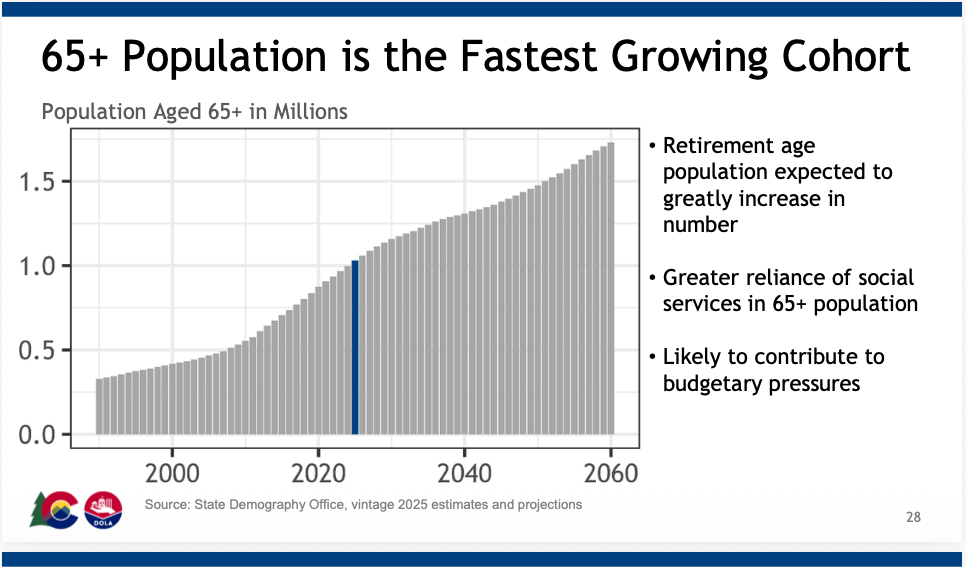
The only fast-growing demographic in Colorado today is people over the age of 65. In fact, the robust longevity of septuagenarians is the only reason Colorado’s population might naturally grow over the next several years. The state’s death rate is expected to surpass the birth rate by 2046, one year earlier than last year’s estimate. In 2040, the fastest growing demo will be Coloradans over the age of 80. We’ll need robots to help care for them, because the state’s workforce will probably be smaller than it is today.
Less In-migration = Flatlining Population
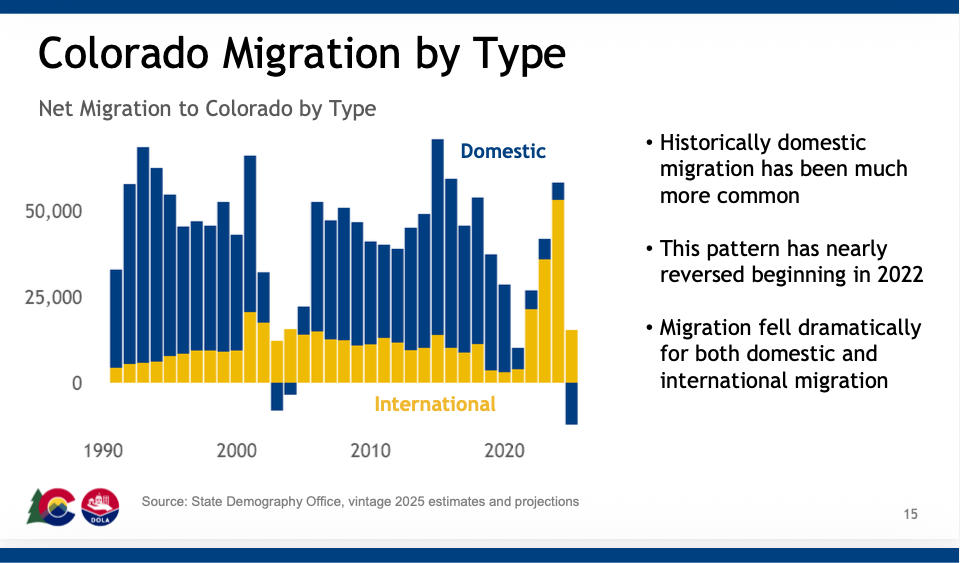
Without international migration in the first half of the 2024-25, Colorado’s population would have declined for the first time since the 1980s.
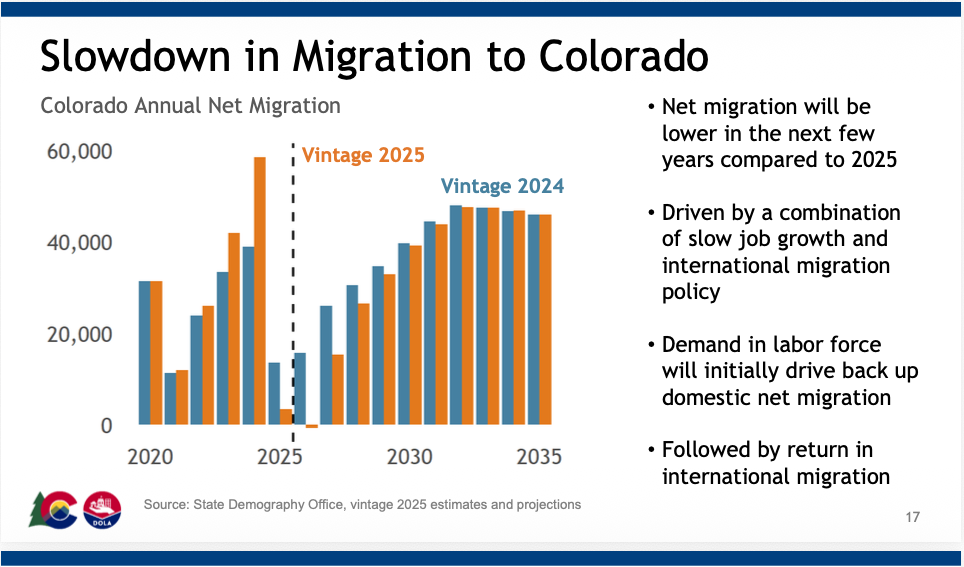
The CSDO expects to these numbers to get worse for the next two calendar years, at a minimum. This chart shows their revised population estimates (see the chart above, in orange) compared to last year’s estimates (in blue).
Did we already hit “Peak Colorado”?
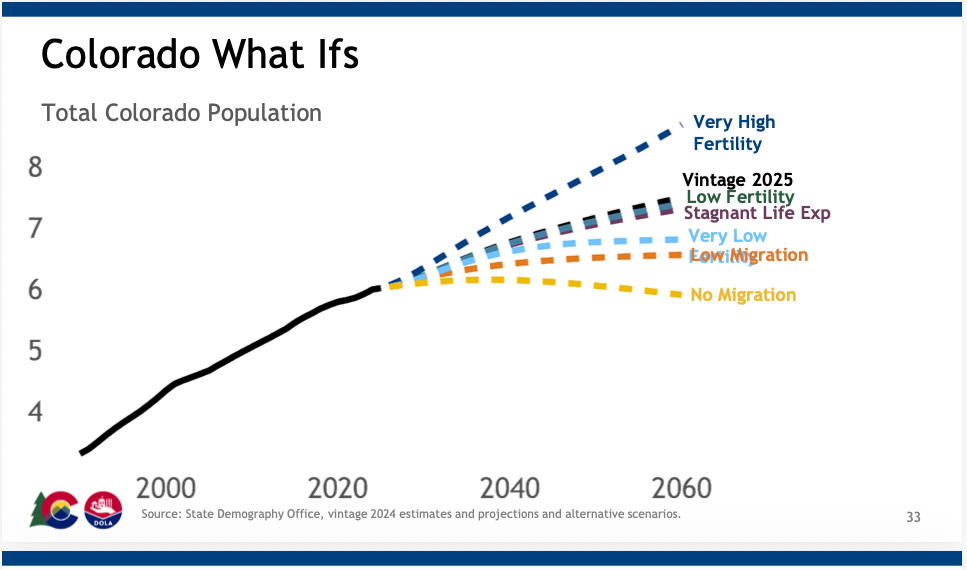
Colorado’s fertility rate of 1.5 kids per household is far below the national average, and projected to continue falling. Without robust international and domestic in-migration, we may have already seen “Peak Colorado” population.
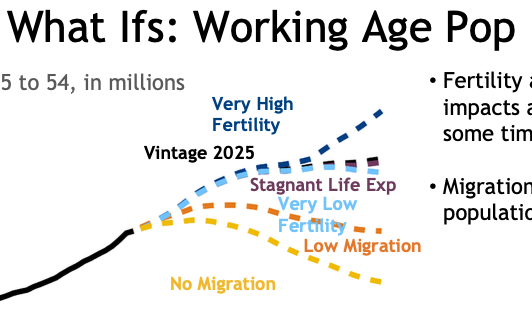
Take retirees out of the equation, and the state’s workforce population is in much worse condition:
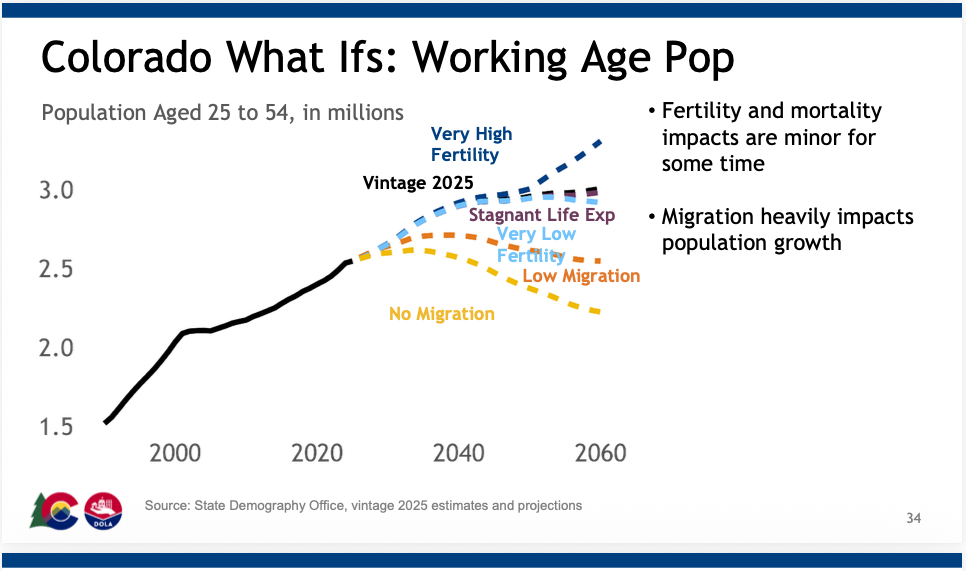
The CSDO emphasized that workforce population estimates are entirely dependent upon strong economic in-migration… a tall order given the recent surprising decline. Assuming the economic climate continues to lag behind the country (or worsens, given the state’s increasing anti-business climate), the state’s workforce population will be smaller in 2040 than it is today.
And this final chart is a heartbreaker that will lead to radical changes in our K-12 and Higher Education systems: 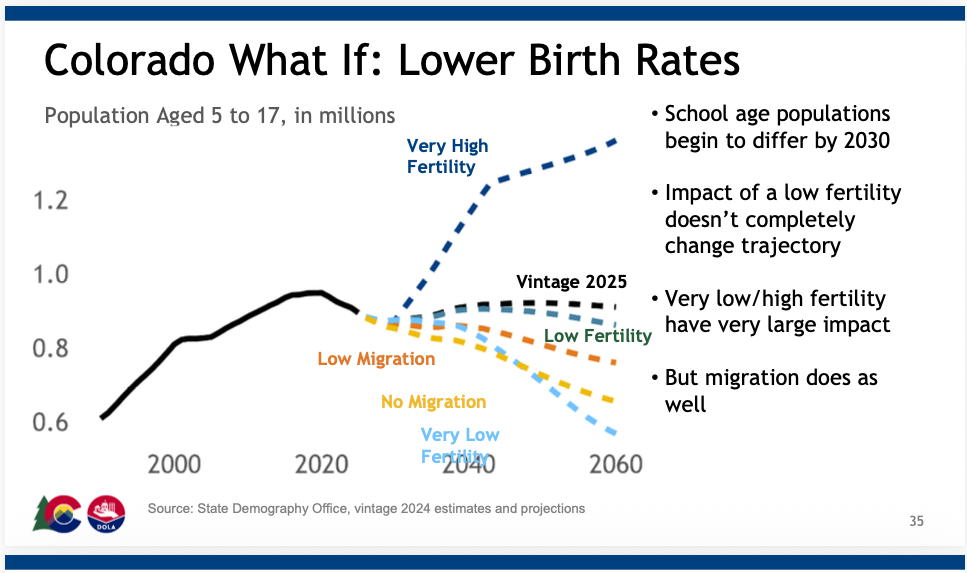
It’s time to rethink everything.
In the previous two decades, Colorado’s population grew at twice the national rate, so these recent findings indicate we are entering an entirely new era in Colorado public policy. Every aspect of society needs to be reexamined, including:
K-12 and Higher Education
Transportation planning
Government services
Health care
Environmental regulations
…and much more.
In the coming months, we will be exploring all of those issues here at the Independence Institute. Our goal is to equip leaders with the best possible ideas to maximize freedom in this new era.
(Coming Next: Colorado’s economic decline by the numbers).