



This is the 2nd article in our ongoing “Colorado 2050” series. In this article, we continue sorting through the Colorado State Demography Office’s updated economic growth projections. A big “Thank You” to the CDSO office for it’s excellent work, and credit for some of the charts below also goes to CDSO’s 2026 Summit guest speaker, Hanna Scovill, Vice President and Senior Economist at Pacey Nehls Economic Consulting.
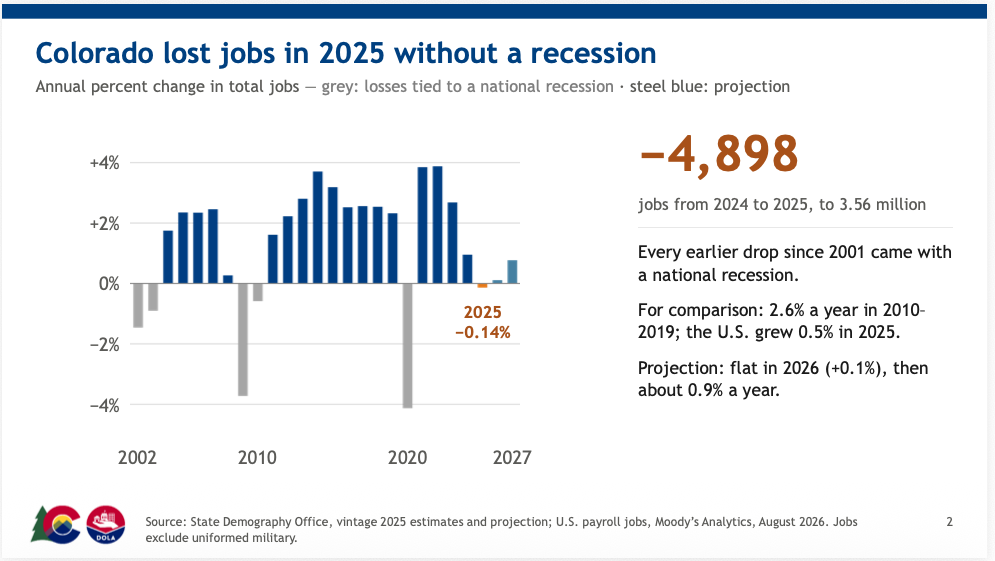
Last year, for the first time in modern history, Colorado lost jobs during a time of national economic growth.
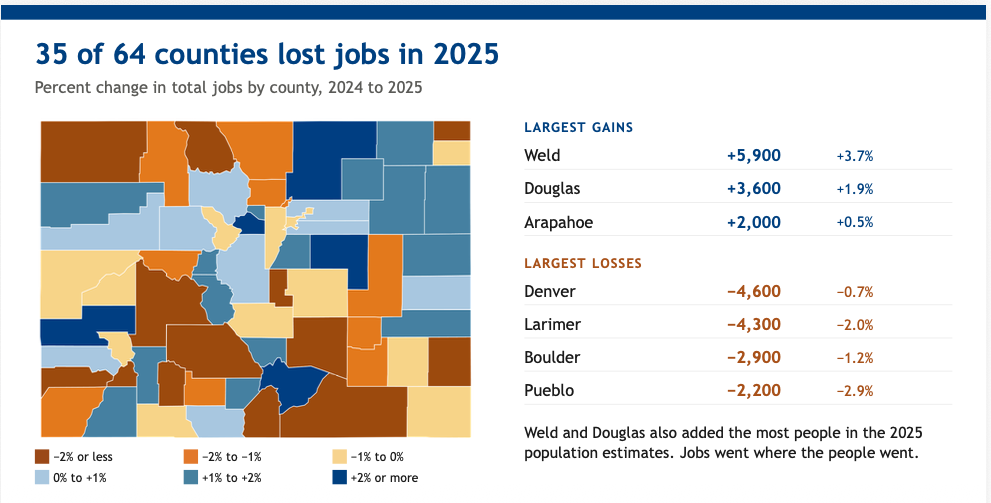
 Some counties fared better than others, depending upon their share of key industries and their vulnerability to out-migration trends. Goverment effectiveness also mattered: growth was more likely to occur in counties where new housing and business permitting kept pace with demand.
If the job numbers seem bad, digging deeper makes it seem worse. Other than growth in the health care sector (which includes state-and-federally funded Medicaid), the only meaningful job growth occurred in state and local government. No matter how high taxes get, it is unsustainable for government to grow faster than the private sector.
Economic Headwinds
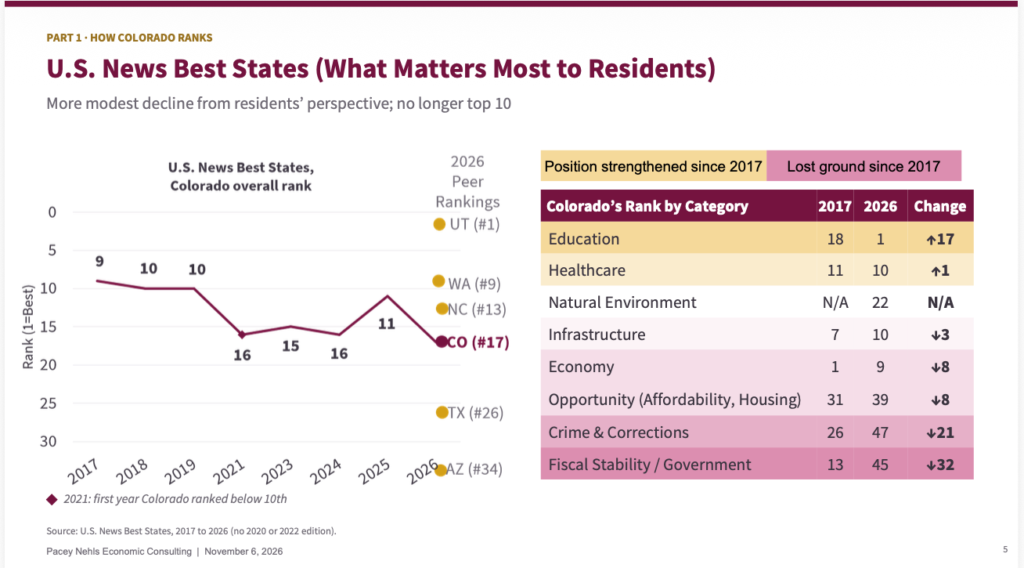
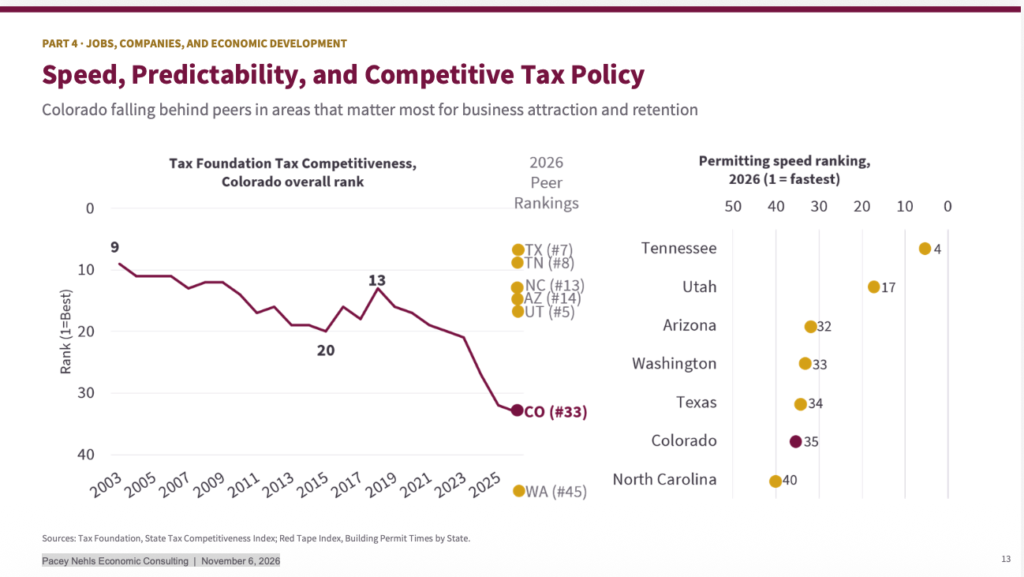
Historically, Colorado added jobs at roughly twice the national rate. Since 2019, the state dropped precipitously in national economic competitiveness rankings.
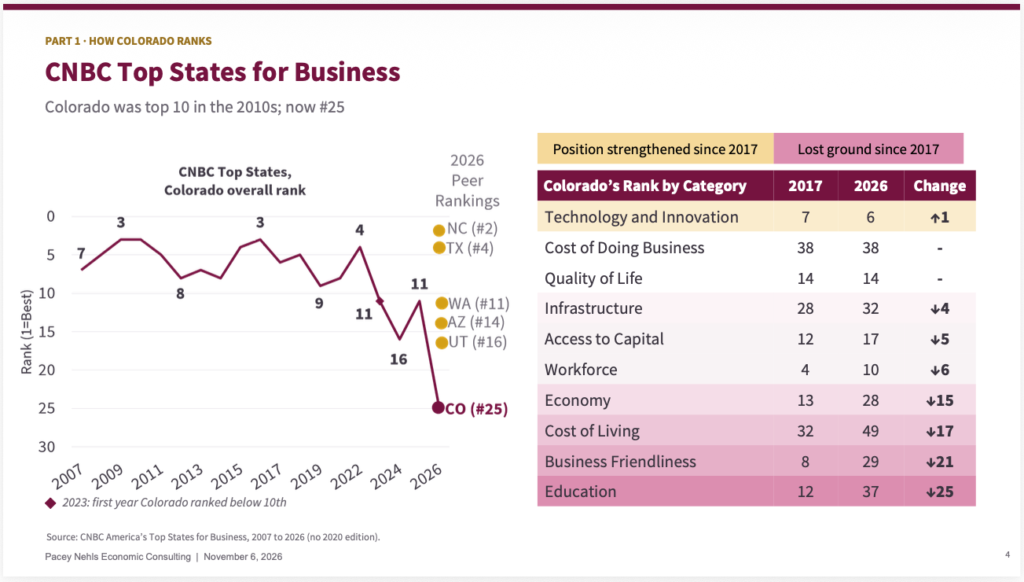
According to US News, Colorado is the third worst state for crime and dropped an astounding 32 spots since 2017 to become the fifth worst rated state for fiscal stability/government- and this was before passage of Amendment 87 moved the state’s top income tax rates into the stratosphere.
Colorado’s future working-age and child population growth rates are entirely dependent upon in-migration to sustain its numbers, or to at least to stem the declines caused by falling birth rates and increasing retirements. Last year, domestic migration was a rare net-negative in state history- 12,000 more citizens moving out than moving in. Every presenter at the CDSO 2026 Summit emphasized that the only way Colorado will restore the rate of domestic in-migration will be to improve its economic competitiveness. Last week’s election results do not bode well for the state’s economic prospects, with the passage of several major new tax increases. Note that this chart below was compiled before the passage of Referendum NN and Amendment 87:
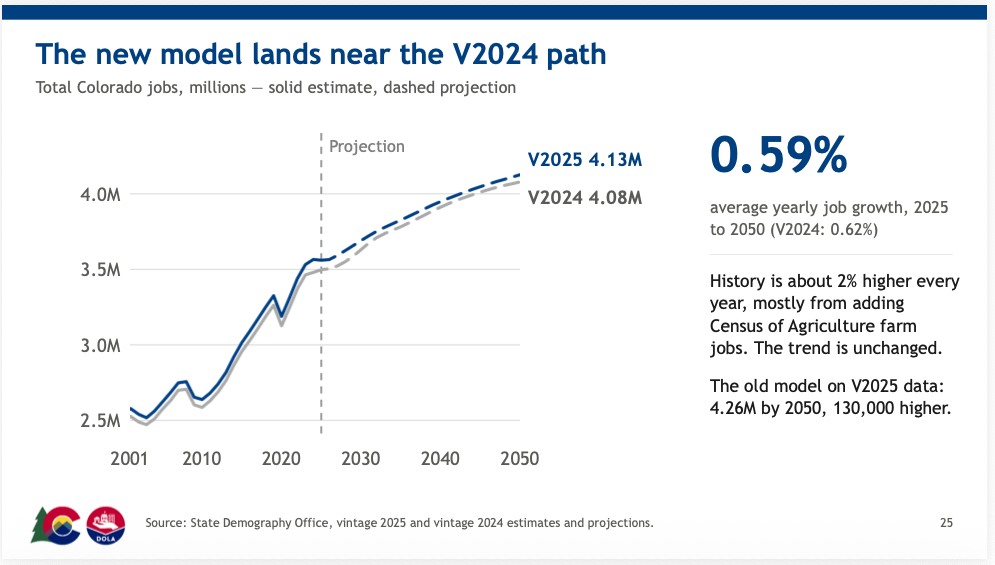
While the CDSO shows job creation essentially flatlining since 2024, they are somewhat optimistic that the state will resume adding jobs, but still lowered their 2050 “total jobs” estimates by 130,000, or 3%.
If these numbers seem unsustainable, it’s because they are. Reconciled against the CDSO’s projections for population growth (or more likely- population decline), the question isn’t whether or not Colorado will lose jobs and population in the next 25 years. The question will be how many will we lose, and how fast will we lose them?
The Independence Institute will continue to digging into these numbers in it’s Colorado 2050 series. Stay tuned for our third installment: Colroado’s declining school enrollment by the numbers.