
The “Nondelegation” Doctrine and the Necessary and Proper Clause
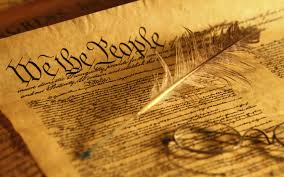
The scope of permissible delegation must be determined from the text of each power and the surrounding context. But there is no need to insert the Necessary and Proper Clause into the equation, except as a useful reminder.
Why Madison’s 1800 Report is Irrelevant to the Constitutional Debate Over Immigration

For many reasons, you shouldn’t try to recreate the Constitution’s original meaning from sources arising after the Constitution was adopted.
Who Called the Constitutional Convention? The Commonwealth of Virginia
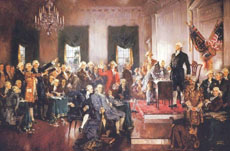
The Virginia legislature, not Congress, called the Constitutional Convention.
The Founders and the Constitution, Part 1: Introduction
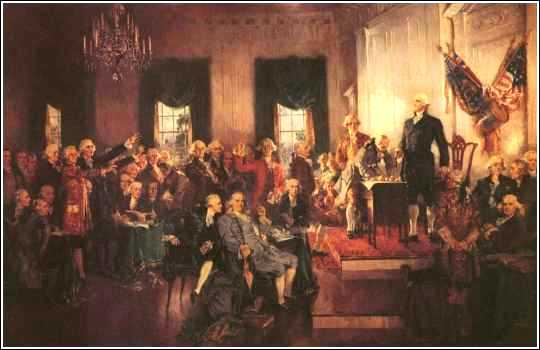
Although the men profiled in this series often disagreed with each other, each played a part of which Americans can be proud.
New Video on the Limits of Congress’s Commerce Clause Power

Congress’ effort to regulate Indian child placement is unconstitutional.
The ideas that formed the Constitution, Part 10: Virgil alone
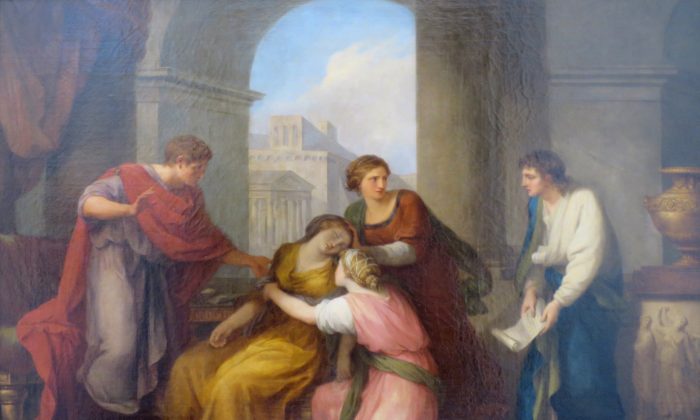
Participants in the ratification debates could supplement English by using Virgil’s expressions . . . Virgil gave their message more force.
Yet more evidence comes to light that an amendments convention is a “convention of the states”
Founding era state legislative records show beyond doubt that an amendments convention is a “convention of the states”
The real Commerce Clause—as the Founders knew it
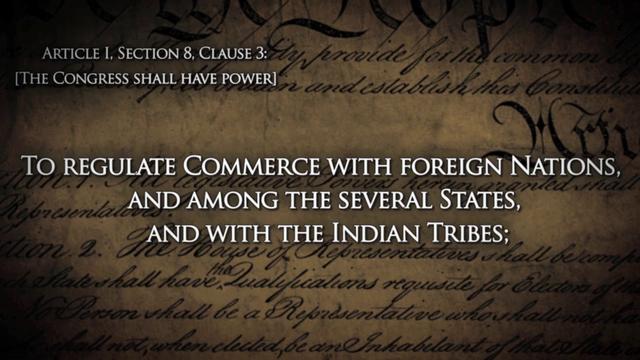
During the Founding era, the phrase “regulate Commerce” had a very specific meaning
The Cult of Advocacy: Comments on the State of Legal Scholarship—With Examples from Professor Ablavsky’s Latest Response

Many writings by law professors merely serve a political agenda and do not meet the minimal qualifications for real scholarship
Defending the Constitution: Why the Framers Thought Ratification by Only Nine States Was Sufficient
Why nine? Because any combination of nine states (even the nine with the smallest populations) would comprise a majority of American citizens.
Understanding the Constitution: Originalism was not invented by partisan Republicans

In constitutional law, the methods applied by “progressives” are the new, partisan inventions. Originalism is the standard bequeathed by the ages.
Will the Supreme Court stretch the Commerce Clause even more?
Some claim that when the word “Commerce” is applied to Native Americans, it magically balloons in scope, allowing Congress to regulate just about anything.
