
The Supreme Court Was Wrong About Taxes
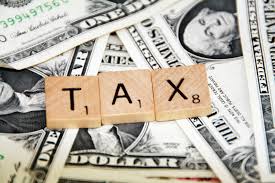
The Constitution’s crucial distinction between “direct” and “indirect” taxes was well-understood by the Founders, but due to lack of scholarly guidance the Supreme Court often has gotten the distinction wrong.
Learn About Chief Justice John Marshall from Rob Natelson’s New Audio Series
Was Marshall really a model for liberal activist justices? Learn the truth in this audio series.
Correcting Biden’s False Statement on the Supreme Court’s Presidential Immunity Decision
Biden’s statement on the Supreme Court immunity decision is provably false.
The Supreme Court’s Trademark Case and the First Amendment: Carrying History Too Far
The court reached the right conclusion, but it erred in two ways.
The Supreme Court’s New “Bump Stock” Firearms Case: A Victory for Gunowners and a Defeat for the “Deep State”

The real significance of this case is that it tells us the notorious “Chevron doctrine” is on the way out.
Did the New York Prosecution Violate President Trump’s Jury Trial Right?
The judge in Trump’s New York criminal trial may have misinformed the jury about when they had to be unanimous.
Deconstructing the Lefty Magazine “The Nation”

A magazine that says it “speaks truth to power” actually is supported by some of the most powerful people in the Washington, D.C. establishment.
The Great John Marshall, Part 4
Marshall was not part of the “living constitution” project. He sought to interpret the Constitution according to “the intention of its makers.”
Justice Alito is Criticized; a Liberal Judge Gets a Pass

A state supreme court justice has been flying flags with leftist symbols for years—without any outcry. How long do you think her judicial career would have lasted if she had displayed a MAGA flag?
The Great John Marshall, Part 3
There has been a effort in the law schools—and at times in the Supreme Court—to appropriate Marshall as a model for liberal activism.
The Great John Marshall, Part 2
Modern accounts of the XYZ affair are bad enough, but they do not begin to capture the insulting nature of the repeated French demands.
It’s a “Convention of the States”—Three More Founding-Era Documents Confirm It
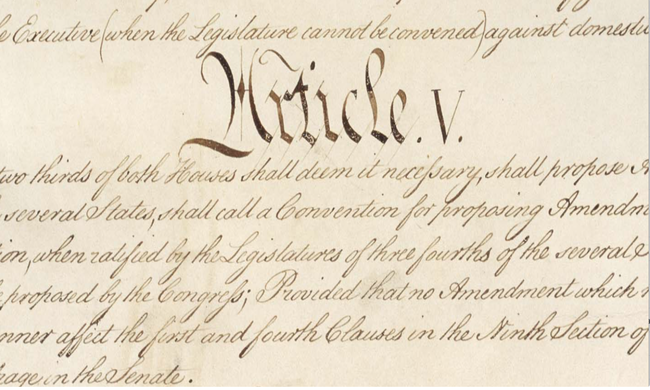
Three new North Carolina documents from the Founding confirm that an amendments convention is a “convention of the states.”
