
Civics 101: How to understand the Constitution
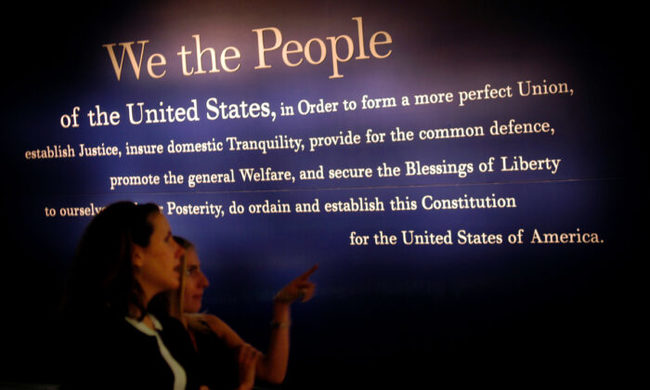
“Here’s an important, but widely overlooked, feature: The document doesn’t grant power only to federal officials. It also confers power on persons and entities who are not part of the U.S. government at all.”
New article shows how amendments conventions and other “federal functions” are regulated
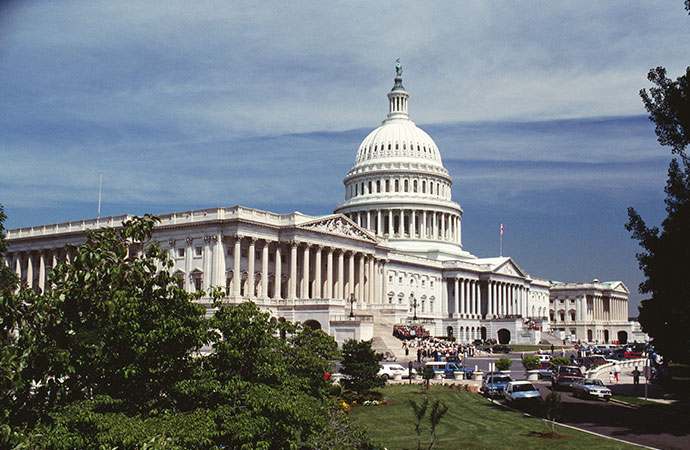
“[A]nother mistake is that because an amendments convention executes a federal function, Congress can control it. But . . . the rules and protocols for carrying out federal functions come from the Constitution, not from Congress.”
City destroys home without paying: Will the Supreme Court take the case?
The Takings Clause in the Fifth Amendment to the U.S. Constitution . . . reads in part, “nor shall private property be taken for public use, without just compensation.”
Denver’s COVID-19 house arrest order is probably unconstitutional

“[Denver] has overreacted and has potentially violated the constitutional rights of city residents and millions of others.
Video: Rob Natelson and Jon Caldara discuss “Nat’l Popular Vote” & protecting the Electoral College’s integrity
Rob explains why II submitted a Supreme Court brief to protect presidential elector discretion and why the National Popular Vote Compact is a terrible idea
Underselling Originalism
Originalism is not a modern invention “[T]he ‘intent of the makers’ had been the lodestar of documentary construction since at least the 1500s.”
Global warming and the Constitution’s amendment process: How to tell whether a ‘consensus’ Is true

How academics formed a completely erroneous “consensus” about the convention procedure of Article V.
Two new briefs in the Supreme Court’s Electoral College case

[The integrity of presidential electors] has taken on great urgency as “progressive” state legislatures increasingly meddle with free elections.
New article: 18th century law shows impeachment requires a crime
Examples of high misdemeanors . . . were bribery, assault, and attempted murder.
The new ERA campaign: constitutional malware

The incentives behind the campaign are obvious. The ERA is poorly drafted and vague (which is why it was rejected). If it became part of the Constitution, the result would be legal chaos. Activists know they would be able to feed off that chaos . . . .
The Mayflower Compact and “consent of the governed” are now 400 years old

Self-government is at the heart of the American experiment. Historically, it is far more important than some other institutions (such as slavery) that [receive] more attention . . . . .
How much power may Congress delegate to federal agencies?

[T]he search for a single “non-delegation” principle applicable to all congressional powers is a futile one. Instead, the scope of permissible delegation of any particular congressional power must be sought in the meaning of the words describing that power.
