

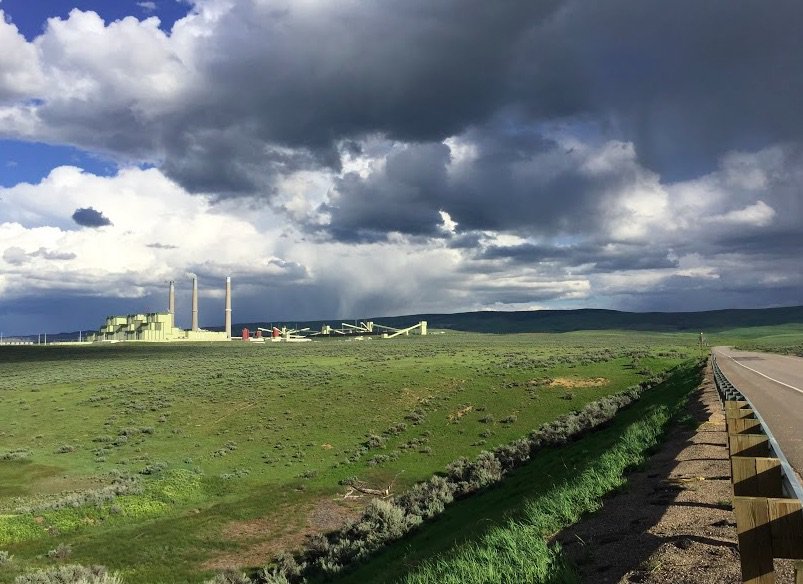


On September 25, 2026, the Department of Energy ordered the coal-fired Craig Unit 1 to stay available to run through December 25. It is the fourth 90-day order under the Federal Power Act’s Section 202(c) authority, and the first for Craig Unit 1 since the D.C. Circuit Court of Appeals vacated a similar order for a Michigan coal plant, the J.H. Campbell plant, on September 11.
Environmental groups like the Sierra Club, Vote Solar, and the Environmental Defense Fund, and Attorney General Phil Weiser have already challenged earlier Craig orders, in the same circuit that ruled against the Michigan plant. They’re bound to argue that the D.C. Circuit’s ruling settles the question.
Not necessarily. Judge Cornelia Pillard of the D.C. Circuit wrote that 202(c) applies “where the Department identifies a risk of substantial harm from inadequate electricity supply that calls for immediate action by DOE in particular, as opposed to by the states.” The court rejected the argument that an emergency has to be unforeseen, stating that a situation may qualify as an emergency “if DOE has reason to believe that the state cannot or will not act in time to reasonably respond,” because “an emergency may exist even though the outage is foreseeable and far-off.”
The newest order pinpoints the kind of “concrete supply issue beyond the state’s competency,” that the D.C. Circuit said might have justified intervention in the J.H. Campbell case. The Southwest Power Pool West balancing authority is experiencing resource adequacy concerns, which were “recently demonstrated during summer 2026 when SPP issued multiple Energy Emergency Alerts (EEA).”
On July 20, 2026, SPP narrowly avoided blackouts as it alerted to EEA 3, the highest alert level that means firm load interruptions are imminent or in-progress. The Department of Energy documents subsequent alerts to EEA 2 on July 24, 2026, and EEA 1 on August 9, 2026. SPP asked for three emergency orders so that it could dispatch specific resources and use backup generation. According to the U.S. Energy Information Administration Form EIA-923, Craig Unit 1 contributed 20,478 megawatt-hours (MWh) in July to help meet demand. That follows an earlier runtime in April 2026, which contributed 56,782 MWh to reliable operations in the grid.
The goalposts have shifted since March criticism from the Colorado Sun, which said that “the plant still hadn’t been called on for actual power,” during the first order. Now the favored allegation is that Craig Unit 1 has run infrequently. That is to the point of the newest order: “SPP is directed to take every step to employ economic dispatch of Craig Unit 1 only during hours necessary to meet the emergency and to minimize costs to ratepayers.” The first time Craig 1 ran under a 202(c) order was in April, a mere week after SPP took over, and it needed to do so for reliability reasons. Criticizing Craig for not acting as reliable baseload, when it isn’t allowed to be, is spurious.
The D.C. Circuit said that DOE may step in when “states, their utilities, and RTOs are unable or unwilling to respond.” SPP is clearly struggling to respond. SPP told the Federal Energy Regulatory Commission (FERC) in September that its western footprint has no resource adequacy requirements until June 1, 2027, and that this has “significantly contributed” to advisories and the three Energy Emergency Alerts to date. Market participants have failed to bring enough energy into the market, with about 9.2 GW of nameplate capacity, but only 4.7 GW made available April through August, far less than the 6.5 GW SPP expected. SPP has proposed a stopgap to penalize shortfalls during emergencies.
Yet SPP’s market participants — including Colorado Springs Utilities, Tri-State Generation, Platte River Power Authority, and others — can only bring the generation they own or contract. Colorado policy has been retiring coal-fired resources and attempting to replace them with inverter-based, intermittent wind and solar. Coal’s share of generation has declined from 45 percent to 25 percent between 2019 and 2024.
Shortages aren’t just Tri-State’s business. Xcel Energy co-owns Craig Unit 1, and its own system is short, too. Xcel Energy’s coal-fired Comanche 3, which originally went offline for repairs in August 2025, returned to service on September 1, 2026. Xcel told the Public Utilities Commission (PUC) that there were “no viable alternatives” to repairing it, and that replacing it would “cost billions of dollars” and arrive in 2029 “at best,” far too late to handle near-term resource adequacy problems.
While Comanche 2 — originally slated to retire at the end of 2025 — was kept open for a year, it wasn’t an adequate substitute. Its first-quarter output fell 33 percent from a year earlier, and EIA-923 data through July 2026 shows it in the same monthly range it has held all year. Xcel’s Colorado system went from a net exporter to a net importer thanks to temporary coal outages. The company has asked the PUC to delay the retirement of Comanche 2 to March 31, 2028, projecting a 527 MW shortfall in summer 2027 without intervention — and that already assumes that Comanche 3 came back online.
The case vacating the J.H. Campbell order defers responsibility from the federal government to states and grid operators that have resource adequacy under control. SPP and Colorado’s largest utility have both told regulators that they don’t have it covered. FERC has yet to rule on SPP’s stopgap proposal, and the PUC will take up Comanche 2 at an evidentiary hearing in November. Craig Unit 1 will have to act as a “narrow, last-resort backstop” in the meantime.