
Why an Amendments Convention is not a “Constitutional Convention”
Sometimes a convention for proposing amendments to the U.S. Constitution is referred to as a “constitutional convention.” That title is both wrong and fatally misleading. The correct name—given by the Constitution itself—is convention for proposing amendments. Other accurate names are amendments convention, Article V convention, or convention of the states. In the Founding Era and […]
The Great Forgetting
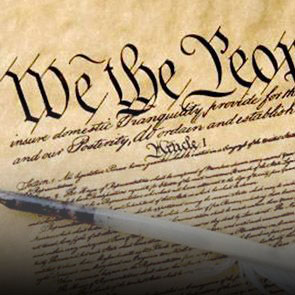
The meaning of some of the Constitution’s 18th century terminology was lost during the 19th century, leading to widespread misunderstanding.
Contraceptives and Catholic hospitals: The primary issue is Obamacare, not the First Amendment
Does the mandate forcing Catholic hospitals to offer abortifacients and contraception violate the First Amendment? The surprising answer is: Probably not. True, there are serious moral and political issues inherent in requiring religious institutions to offer “treatments” they find theologically offensive. But, despite the claims of many Catholic and conservative commentators, the U.S. Department of […]
Some Questions for “Progressives” Carping about the Citizens United Campaign Finance Case
The Supreme Court’s decision in Citizens United v. FEC has generated a great deal of uninformed, and sometimes hypocritical, whining. In Citizens United, the Supreme Court held that people organized in the corporate form have the same First Amendment rights they enjoy when they organize in other ways. Some opponents of the decision are even […]
The Little-Known—but Seminal—York Town Convention of 1777
The U.S. Constitution authorizes a “convention for proposing amendments” to offer amendments for ratification (or rejection) by the states. The mechanism has never been used (all amendments have come from Congress), and many people have been curious about how it is supposed to work. But that’s because they are unaware of the long series of […]
More Constitutional Baby Babble—this time at Vanity Fair
Vanity Fair’s sophisticated approach to rescuing a drowning man is this: Lecture him about how we all need plenty of water. The tony mag’s new attack on the Tea Party is entitled “Debt and Dumb.” But the attack shows the authors and editors at VF to be the ones either deaf or dumb: Either deaf […]
The Fascinating Story of How the States Used the Constitution’s Amendment Procedure to Adopt Reform, 1789-1913
Common sense tells us that an out-of-control Congress is not going to rein in its own power. The American Founders predicted this might become the case, so they provided a way by which the state legislatures could propose and ratify corrective constitutional amendments without Congress being able to stop them. This is the “state-application-and-convention” procedure […]
Confused About an Article V Amendments Convention? New Article Provides Answers
As I predicted in this column, Congress’s continued inability to deal effectively with the debt crisis is AGAIN provoking interest in bypassing Congress with one or more corrective constitutional amendments. We could do this if the state legislatures use their constitutional power to bring about what the Constitution calls a “convention for proposing amendments.” I’m […]
Can the President Raise the Debt Limit Unilaterally? Hell no!
Some people are claiming that if Congress fails to raise the debt limit, the President can raise it himself unilaterally. The claim is not only wrong, but far scarier for America’s future than a default would be. Typical of those arguing this way is Bruce Bartlett, the formerly conservative economist who in recent years has […]
The greatly misunderstood Chief Justice John Marshall
One of the most enduring myths in American constitutional history is that Chief Justice John Marshall was a judicial activist whose decisions are good precedent for the modern federal monster state. Marshall was the fourth chief justice of the U.S. Supreme Court (third, if you don’t count John Rutledge, a recess appointment who was never […]
Reining in Congress: An Enforceable Balanced Budget Amendment
There is growing sentiment that one or more constitutional amendments may be necessary to rein in the runaway Congress. The principal mechanism the Founders built into the Constitution for such contingencies is the procedure in Article V by which two thirds of the state legislatures force what the Constitution calls a “Convention for proposing Amendments.” […]
The 1798 “Act for the Relief of Sick and Disabled Seamen:” Yet another “progessive” irrelevancy
As Tom Woods points out on his blog, advocates of Obamacare have dug up a 1798 federal statute that, they say, shows that the original understanding of the Constitution is broad enough to authorize federal health care programs. The statute authorized creation of federal hospitals for sailors. After I entered a brief response to his […]
