
American Colonies: Mostly Private Enterprise

Too many of us who are enthusiastic about space exploration and colonization expect the federal government to lead the way. We should learn from the founding of the American colonies. In his notes to the ninth volume of English Historical Documents, the distinguished historian Merrill Jensen explained how much the English settlement of America relied […]
Electoral College: Answers to Questions
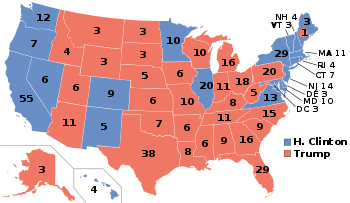
Here are answers to some questions I’ve gotten about the Electoral College since Election Day: Q. What is the Electoral College? A. It’s not an educational institution! The term “college” is a typical 18th century latinate usage, based on the Latin word “collegium,” meaning a club or guild. (This another example of why knowledge of […]
Ebenezer Hazard: Forgotten Founder
An earlier version of this article first appeared in Townhall.com. When we celebrate leading American founders such as George Washington and James Madison, we sometimes overlook their talented colleagues. One of these was Ebenezer Hazard. As postmaster general under the Articles of Confederation, he helped bind the country together. As a historical editor, he preserved precious […]
Did Congress Approve the Constitution? A Member’s Letter Says “Yes”
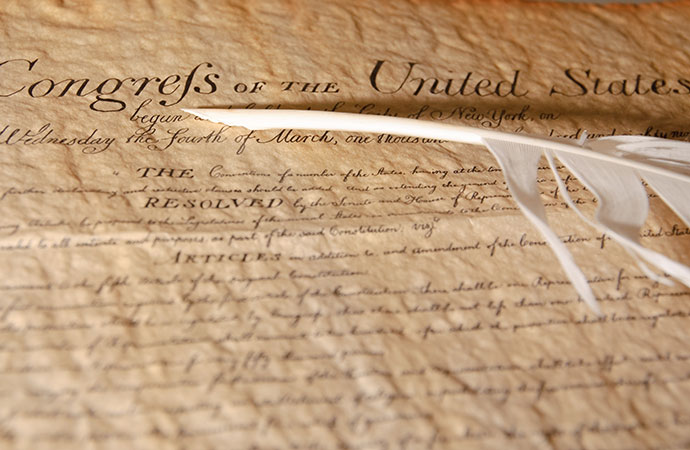
Some people argue the Constitution was adopted illegally. They assert that the Confederation Congress needed to approve the document, but never did. But principles of law tell us that they are wrong. So does a rarely-mentioned letter from a member of the Confederation Congress. It is true that most (not all) of the resolutions by […]
This Resolution Suggests Congress Did Agree to a Broad Constitutional Convention
On April 23, 1787, the Confederation Congress extended the post office franking privilege to all commissioners about to attend the Constitutional Convention. In other words, Congress gave to convention delegates the same privilege to send and receive free mail its own members enjoyed. Why is that important? Because it tends to show that Congress accepted […]
Changed Conditions May Justify Term Limits
This is the full version of an op-ed first appearing in the Detroit Daily News. Advocates for term limits want to amend the Constitution to add them. Their most common argument is that restricting how long an elected official may serve will curb special interest influence and other federal abuse. The Articles of Confederation, the document […]
What should you remember when drafting a constitutional amendment?
Last month, Citizens for Self Governance sponsored a simulated convention for proposing amendments in Williamsburg, Virginia. I was an adviser for the project, and just before the initial meeting I spoke to the assembled commissioners. My purpose was to provide them with some last-minute tips on drafting proposed constitutional amendments. Several people have asked me […]
What Connecticut’s Authorizing Documents Tell Us About the Constitutional Convention—and About Modern Misinterpretations
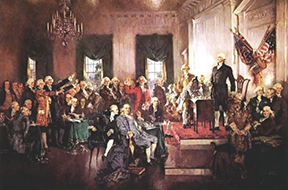
On May 11, 1787, the Samuel Huntington, the governor of Connecticut, addressed his state legislature about the pending Constitutional Convention. Shortly thereafter the legislature adopted a law governing Connecticut’s participation in the gathering—the eleventh state to do so. (Only Maryland acted later.) The governor’s remarks, and the ensuing legislative resolution, illustrate the following: * The […]
Could Congress Control an Amendments Convention? Not According to the Founders!
As we move closer to holding a “convention for proposing amendments” to restrain federal overreach, naysayers have not been silent. One of their claims is an amendments convention would be fruitless or dangerous because it could be controlled by Congress. The Constitution directs Congress to “call” an amendments convention when two thirds of the state […]
Originalist Research Guide Updated
Scholarly investigation into our Constitution’s actual meaning—or, more precisely, into the Constitution’s legal force immediately after adoption—commonly is called “originalist” research. Until fairly recently, the quality of originalist research was fairly low. Most of it was conducted by law professors with little background in historical method or in founding-era language or social conditions. Moreover, most […]
When We Amend the Constitution, Make Sure We Follow the U.S. Procedure, not the “Confederate States” Procedure
People who claim that states may, through state law, dictate the wording of amendments to the interstate “convention for proposing amendments” are not accurately representing the system laid out in Article V of the U.S. Constitution. Rather, they are unwittingly advocating a system similar to the one adopted by the defunct “Confederate States of America.” […]
First Amendment Protection is for More Than Political Speech
This article was first published in CNS News. The modern U.S. Supreme Court grants more First Amendment protection to political discourse than to other forms of expression, such as commercial advertising. The court holds that political discourse enjoys a “preferred position.” The preferred position doctrine is taught in the nation’s law schools, so many lawyers […]
